M.I.A. Didn’t Change — The Culture Did
M.I.A. Didn’t Change — The Culture Did
M.I.A.’s M.I.7 reignites the same debates that have followed her for years—authenticity vs accountability, innovation vs appropriation, and counterculture vs commerce. This is what that tension reveals about us.

Credit: Raph_PH
M.I.A. Didn’t Change — The Culture Did
A funny thing happens when an artist announces a “gospel” record and the first reaction isn’t curiosity—it’s classification. Before the music even has time to settle, the conversation fractures into familiar positions: admiration, skepticism, dismissal, defense. Not chaotic, not explosive—just… locked. A sizable group leans in with conviction. Another pulls back just as firmly. And most people sit somewhere in between, watching the tension play out.
That’s the shape of M.I.A. in 2026. Not universally loved. Not universally rejected. But consistently capable of producing a specific kind of response: certainty at the edges.
What’s new isn’t that M.I.A. is polarizing. What’s new is what that polarization reveals about the culture around her.
Because M.I.7 isn’t just another release. It’s a reframing attempt. Marketed as seven tracks written across seven locations in seven days, positioned as her “answer to a gospel album,” and notably framed as work that leaves politics behind, it arrives with a built-in contradiction.
Politics has never been something M.I.A. could simply opt out of. Which is why the question isn’t whether M.I.7 works as music. It’s the same question that has followed her entire career:
Is she a visionary—or a provocateur?
And in 2026, does that distinction even matter?
Fault Line One: Authenticity vs. Accountability
For one side of the audience, M.I.A.’s appeal has always been rooted in a kind of radical consistency. She says what she wants. She resists easy framing. She treats identity, politics, and art as inseparable.
In that reading, authenticity isn’t aesthetic—it’s ideological.
Her past statements around vaccines, censorship, and institutional distrust weren’t interpreted as isolated controversies, but as part of a broader worldview: one that challenges who gets to define truth, legitimacy, and discourse itself.
But that same posture lands differently in a post-COVID media environment.
Because the expectation has shifted. Accountability is no longer optional. It’s baked into how audiences engage with public figures. And when an artist operates in ways that blur the line between critique and amplification—especially through controversial platforms or rhetoric—the question becomes less about intention and more about impact.
M.I.A.’s ventures outside of music—from her OHMNI clothing line, positioned around EMF shielding, to politically charged endorsements—have intensified that scrutiny. Not because artists haven’t always had opinions, but because audiences now treat those opinions as extensions of the work itself.
So the divide isn’t just disagreement. It’s a fundamental difference in how people define responsibility.
Fault Line Two: Innovation vs. Appropriation
M.I.A.’s entire artistic language is built on collision.
Sounds from different geographies. Symbols pulled from multiple cultural registers. Aesthetic references that refuse to stay in one place.
From Arular onward, that approach was framed as innovation—a kind of borderless creativity that made traditional categories feel outdated. Critics praised her ability to compress global influence into something immediate and modern.
But the cultural lens has shifted. What once read as fluid now invites a different set of questions: Who gets to move freely between cultures? Who benefits from that movement? And who gets labeled a pioneer versus an outsider?
M.I.7 reactivates those tensions directly.
Its recording footprint spans multiple continents. Its “gospel” framing draws on a deeply rooted cultural form that carries historical weight. Its sonic palette continues to blur lines between origin and reinterpretation.
None of this is new for M.I.A. What’s new is the context surrounding it.
In 2007, globalization was still largely framed as possibility. In 2026, it’s framed through power—access, authorship, and ownership. The same artistic decisions now land inside a more skeptical cultural climate.
Which is why the appropriation conversation hasn’t faded.
It evolved.
Fault Line Three: Counterculture vs. Commodity
If the first two tensions live in theory, the third lives in the marketplace.
M.I.A. has always operated in contradiction, but the current moment makes that contradiction tangible.
An artist long associated with resistance now operates within systems of scarcity, branding, and premium positioning. Limited-edition releases. High-priced physical formats. Product lines that translate ideology into objects.
The OHMNI line is the clearest example. Framed as protection against digital surveillance and electromagnetic exposure, it transforms a set of beliefs into wearable identity.
Whether you interpret that as empowerment or opportunism depends on where you stand.
Because in 2026, counterculture doesn’t sit outside the market.
It moves through it.
Resistance has become a design language—one that can be packaged, priced, and distributed like anything else. And for audiences already skeptical of institutions, that packaging can feel either like truth-telling… or exploitation.
The disagreement isn’t about the product.
It’s about what the product represents.
What the Split Actually Means
The audience response to M.I.A. isn’t chaotic. It’s structured.
There’s a strong base of support. A smaller but highly vocal group of rejection. And a broader middle that isn’t disengaged—but isn’t fully aligned either.
That’s not dysfunction. That’s a signal.
It suggests we’ve moved into a cultural moment where artists aren’t just consumed—they’re interpreted, evaluated, and categorized in real time. Music isn’t separate from ideology. It’s part of it.
We ask for authenticity, but within boundaries. We celebrate provocation, but only when it aligns with our expectations. And when it doesn’t, the reaction isn’t passive—it’s decisive.
M.I.A. disrupts that system not because she’s uniquely controversial, but because she refuses to resolve her contradictions into something legible.
She doesn’t offer a clean arc. No redemption narrative. No simplified positioning. Just tension.
The Real Question
M.I.7 positions itself as something more intimate. More spiritual. Less political. But that separation feels theoretical. Because the real story isn’t whether M.I.A. can step away from politics.
It’s whether the culture will allow her to. And maybe the more uncomfortable question is this:
In a moment where everything has to be clearly defined—aligned or rejected, endorsed or dismissed—what happens to artists who insist on existing in the gray?
And what does our inability to sit with that ambiguity say about us?
Share this article
Join the discussion
Comments
Welcome to our comments section!
Please read and understand our Community Guidelines before participating.
Your comment history and more now lives under the My Profile tab at the top of the comments. If you're having any issues verifying your account, email support@example.com
All Comments (0)
ADVERTISEMENT
End of Article Ad (300x250)

More in Music
Related Articles
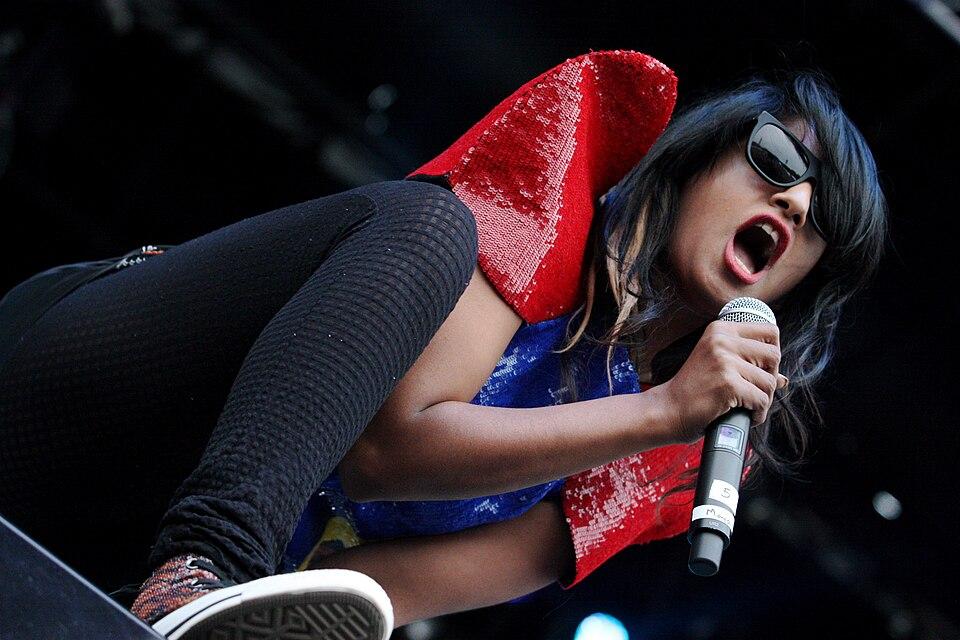
The M.I.A. Files: A Timeline of the Eras That Rewired Pop Culture
With M.I.7 arriving, M.I.A.’s career feels newly relevant. This timeline breaks down the eras, sounds, and cultural shifts that rewired pop.
All Drake Albums Ranked (2026): From Hungry Toronto Kid to Streaming Empire
From Take Care to Iceman, we rank every Drake album released through 2026. Explore the classics, the misses, and the surprise triple-album experiment that may define Drake's next era.
Kanye West Albums Ranked (2026) | Every Album, Worst to Best
Kanye West doesn’t have a normal discography. He has eras. We ranked every album from The College Dropout to BULLY based on impact, execution, and cultural relevance.